Showing posts with label Christmas. Show all posts

Sunday, December 25, 2016

CHRISTMAS - We Are Made For the Child

So they went in haste and found Mary and Joseph, and the infant lying in the manger.

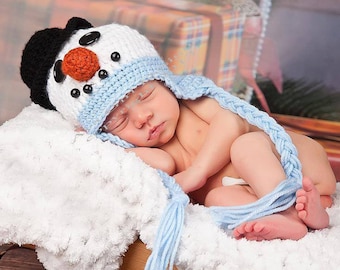
What is it about babies?  Why are we saw drawn to them?  I suppose not everyone is, but it seems that most people are instinctively moved by babies.  In saying this to you, perhaps you might verify these thoughts from your own experience – you have seen how people react to a baby.  This response is not only an adult response; children respond to babies as well.  I recently observed my 2 young nephews interact with another friend’s baby.  All other play came to a halt as they were transfixed by an infant.  Even babies respond to other babies, they are drawn to the face, the smile and the eyes of one who is so similar to them. 

Not too long ago I read an article that researched this question from a scientific perspective.  The article acknowledged that it was Charles Darwin who originally pointed out that there is something about infants which prompts adults to respond to and care for them which allows our species to survive. A zoologist further proposed that it is the specific structure of the infant face, large head, big eyes and cheeks that elicit a parental response. But a study from 8 years ago took this hypothesis a step further, finding a key difference in the brain activity of normal adults when they viewed infant faces compared to adult faces.  Their study showed that a region of the human brain called the medial orbitofrontal cortex (I guarantee you – no other Christmas homily is using the phrase "medial orbitofrontal cortex") becomes highly active within a seventh of a second in response to infant faces but not to adult faces.  The study determined that these responses are too fast to be consciously controlled and are therefore perhaps instinctive.  This study gives us the ability to acknowledge that we are biologically made to respond uniquely and positively to a baby.  -- I guess God knew what he was doing.

Is not our celebration of Christmas a faith expression of what may also be a biological reality?  We are made to respond to the child.

In a few moments we will profess our faith.  Together we will say…
He came down from heaven,
and by the Holy Spirit was incarnate of the Virgin Mary, and became man.
For our sake he was crucified under Pontius Pilate, he suffered death and was buried,
and rose again on the third day.


As we gather to celebrate the birth of the Lord, we are professing that what we ultimately see on the cross, we see first in the manger. In the cross, the mystery of God’s plan for salvation is fully revealed; by his act of sacrificial love, granting us hope through the power of the resurrection.  In the manger we see a child who engages the instincts of our biology and our faith and from this very moment the world is transformed

The child is mystery.  No matter how much knowledge we have about biology, genetics and reproduction, a newborn child is a profound mystery.  We stare in amazement, because we can’t quite wrap our minds around the full mystery of the birth of a new life.  We need mystery in our lives, making us aware that there is something beyond what we see through eye and mind.  Mystery impels us to continue to seek, to wonder and to be filled with awe in the presence of God.  The child born in mystery sets us on the path of the mystery of our salvation.

The child is Love.  We love babies. We caress them and hold them, expressing the depth of our affections.  But children evoke in us a deeper love, a sacrificial love.  The baby needs the sacrifice of the sleepless nights of parents, who work two jobs to support him.  The sacrifices of time, energy and finances are just some of the ways in which the parent offers loving sacrifice.  The child in the manger needs the sacrificial love of parents and in so doing prepares the way for the sacrificial love that he offers of himself on the cross.

The child is hope.  We have big dreams for our children.  In them we the solution of world problems, joyfulness in the simplest of things, and a passion for knowledge.  A child gives hope to the generations that precede her, trusting that she will provide the care for them as they provided for her.  The child in the manger is the hope that God has not forgotten his people, that all is not lost and that sin and death ultimately have no power over us.
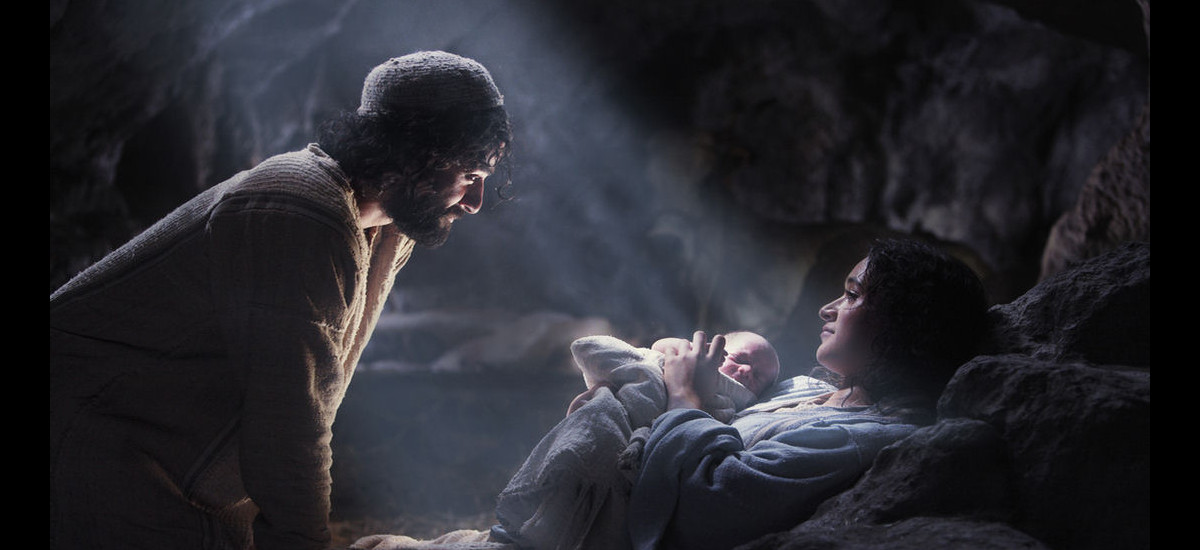

What begins in the manger, is fulfilled in the cross and his lived here on this altar whenever we celebrate the Holy Eucharist.  Through mystery, love and hope, the one born in a manger, the one who is raised from the dead, is the one whom we encounter today and every day in the Holy Eucharist.  We are made to respond to the child, who comes to us.  Let our innate desire for him, awake in us an awareness of his desire for us.  For he longs for us to embrace the mystery, love and hope of his presence, and so share in the building of His Kingdom.

Merry Christmas!

Friday, December 25, 2015

The journey -- HOW DID YOU GET HERE?

For whatever reason, as a child, I remember adults often asking each other at social gatherings a question that I thought was strange.  Shortly after arrival, coats now off and initial greetings expressed someone could be heard asking, “How did you get here?

Thursday, December 25, 2014

CHRISTMAS TRUCE

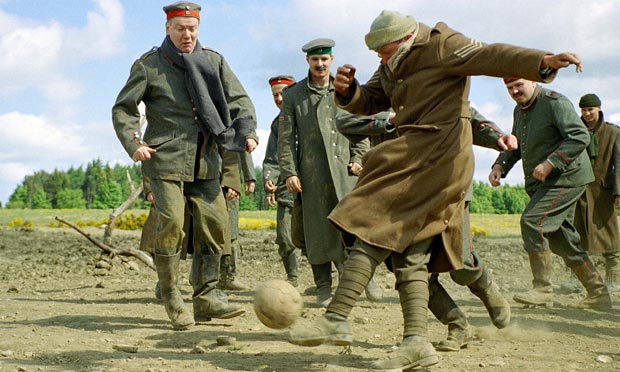
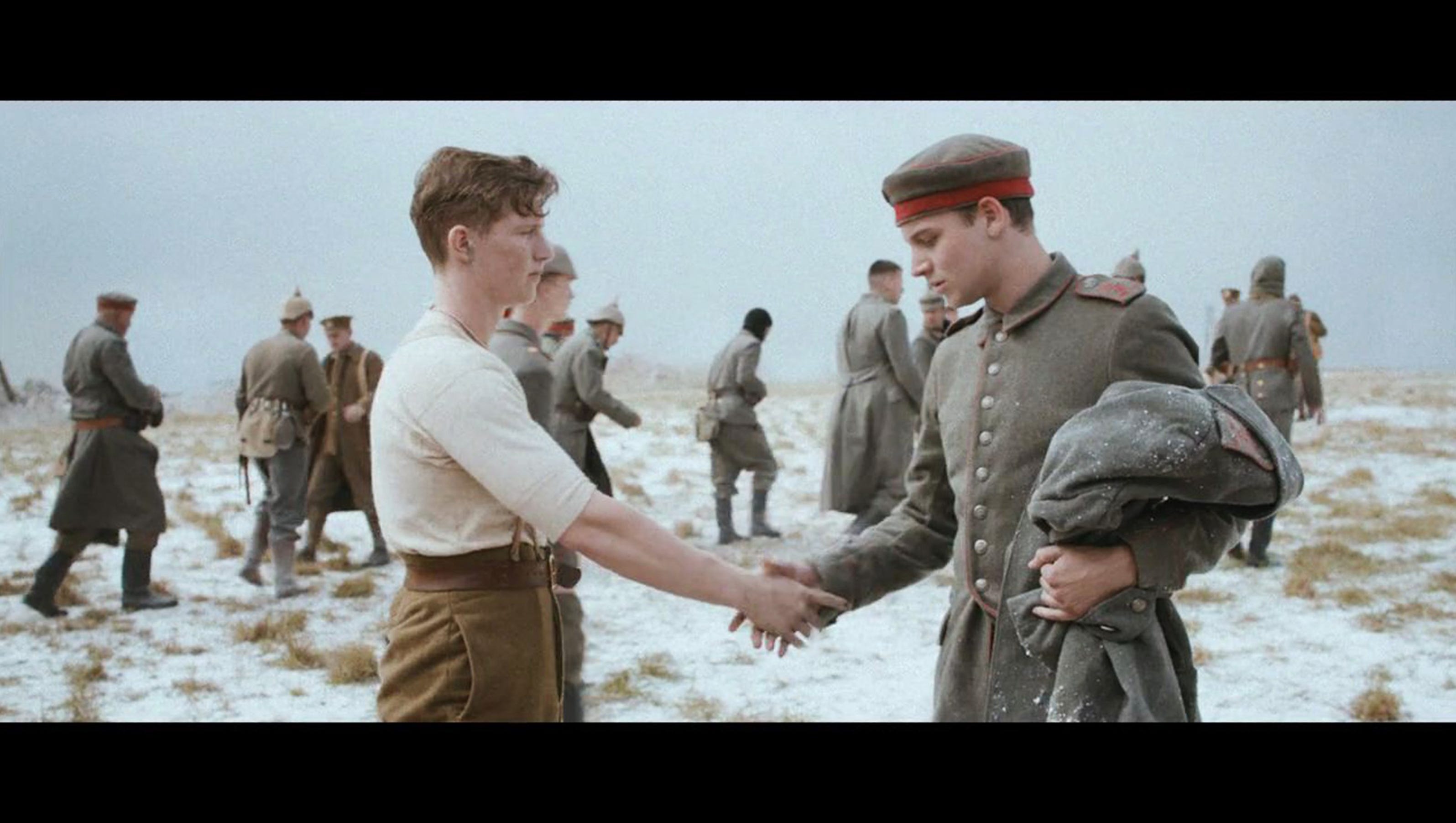
Because this year marks the 100th anniversary of its occurrence, there have been quite a few articles and stories written about what is known as the 1914 Christmas truce.  It is the legendary story of British and German soldiers on the western front of World War I, ceasing hostilities on that Christmas and actually joining each other in companionship, playing soccer and singing Christmas carols together.  Movies and books have been written, dramatizing the occurrence and it has become a hopeful symbol of the possible.  The reality is the Christmas day truce, was the culmination of what had become an ordinary occurrence.  Soldiers on the front were in such close proximity to each other that they would shout to each other in conversation.  They develop agreements not to attack each other at tea, meal or washing times.  They allowed each other the opportunity to peacefully recover the deceased and injured.  During these breaks they were known to exchange small gifts and cigarettes.  One historian reflected on these truce experiences as one that “gave soldiers some control over the conditions of their existence.” The December 1914 Christmas Truce was not a unique event, but a result of the closeness they had already developed.


What I find most interesting about the famous Christmas truce is that it was not a political or humanitarian decision from above, it came genuinely from the men in the trenches.  Such truces were discussed and proposed by various leaders, but few believed it was possible and some saw it as weakness.  Pope Benedict XV is known for appealing to the heads of state to avoid the war before it began and at the beginning of that December begged again that the warring nations would embrace a Christmas truce. His appeal fell on deaf ears.  The truce happened not as a top down order, but a grass roots gesture of human decency.  The enemy was so close, their deplorable living conditions similar, and they all shared the same desire to return to their families.  They had more in common than they had differences – and those common desires evolved into a unifying peace -- which perhaps was the most authentic celebration of the birth of the savior that one could have. 
We've lived for many years now in a new kind of war. One hundred years after the First World War, we are still longing for a peaceful world.  We feel powerless and we find ourselves saying someone needs to do something.  We look to our leaders and to Pope Francis for the answers and direction; but the world doesn't seem to change.  Within our own nation and our own city we have been living a painful war these last few months.  In the wake of the assassination of two police officers – political leaders and clergy have called for a truce to this war but the protests and rhetoric go on. We have battles in our own personal lives too, wars at home.  How many of us have asked our mother what she wants for Christmas only to receive the reply, “I just want everyone in this family to get along.”
In the divine wisdom of God, the savior of the world is not an earthly king, a soldier or even a member of the religious establishment – but a savior who is close to us in our humanity.  The salvation that we seek from the battles of our lives is found when we draw close to this child born in a manger.
God himself literally comes across the line to be in humanity, because God sees himself in us. We are made in his image and likeness – so we may know peace.
On the western front of World War I, soldiers drew close to the child as they spent time with the savior who was present in their enemy across the line – and they knew peace.


Through the words of the Gospel, the reception of the Holy Eucharist and our meditation on the nativity scene before us, - we draw close to the Lord and we hope for his peace.
When we have the courage to cross the lines of life and see our God in our enemies and our agitators, we know the saviors peace.
With whom do we need to come to a truce?  Who is across the table, across the street, down the hall, around the corner, in the next town over, the bordering nation or across the globe who bears the same struggles and the same Christ as me?    Can we look across these battle lines of life and see a brother or sister whose joys and sorrows are the same as mine?  Who simply longs for peace like I do?
We heard St. Paul in his letter to Titus say, “our savior appeared, not because of any righteous deeds we had done but because of his mercy.”  God looks across the battle front of human history and he sees his Son in us, he sees his sons and daughters – and without merit, he extends his mercy, there is peace.  When we look across the battle fronts of our lives – we can’t help but see Jesus.  The innocent child born of meager means, the man on the cross who dies for us; calling us to be merciful.  No one deserves mercy – it is a sacrificial gift which is the seed of peace.
In the folklore of the telling of the 1914 Christmas truce, it is often recounted that the carol the soldiers sang together was, Stille Nacht - Silent Night.  This probably was not accurate, since the German song was not yet well known to the English speaking Brits.  It is more accurately believed that what they sang together was, “O Come All Ye Faithful,” because both the German and English speakers would know the tune and its Latin lyrics.  Moreover, this carol more accurately reflects what made the truce possible; faith and the faithful.  Not leaders and governments – the faithful who come to adore Christ.

The birth of Jesus, God made man, is the manifestation of the divine truth that a genuine peace happens when the desire to be right is sacrificed for the greater desire of mercy.  The child in our midst draws us close this day and every day so we may recognize him in friend and adversary, extinguishing our thirst to battle and fostering in us the desire to manifest divine peace.


Wednesday, December 25, 2013

You Belong Here, Christmas homily 2013


Here at Holy Family, this celebration of Christmas is particularly joyful as it is our first Christmas in our newly renovated church.  With the renovation comes the additional blessing of now having the space to place our Nativity in our sanctuary for the first time in many years.  Up until now it was displayed in the back of the church.  Its presence in the sanctuary enhances our focus on the profound mystery of the Lord’s birth in the most humbly of environments.
 
This image of the manger in the stable is one that we have come to take for granted.  It is now very common to us but it came about because of the piety of Saint Francis.  In 1223 – three years before he died Francis asked the Pope for permission for a special ceremony.  In the outdoors with real live stock and a child in the manger Mass was celebrated amidst this living nativity.  It touch the hearts of the people and the friars because even then Common sense would say that the Son of God, the messiah does not belong here in a stable.  What Saint Francis sought to teach, however, was that none of the world, nor the most impoverished of humanity is beneath the dignity of Christ.  No one can say to this newborn, “You don’t belong here,” because he chooses to be here in the stable but on the cross that hangs above it as well.  The Father chooses and the Son accepts his place amongst sinful and dirty people.
As I looked at our nativity the donkey resting behind Mary caught my attention and reminded me of song on one of my family’s Christmas albums called, the Ballad of the Christmas Donkey 

Long ago, in another day,
A donkey cried in his donkey way,
I'm not beautiful, I'm not beautiful,
What good to anyone am I.
Other animals are big and strong,
Or rare or filled with an animal song,
But I'm not beautiful, I'm not beautiful,
What good to anyone am I.

Heaven cried...donkey you can carry,
Will you carry Mary...angels for your guide.

On Christmas morn', in the stable hay,
The donkey smiled in his donkey way,
I feel beautiful, I feel beautiful,
As beautiful as anyone am I....
As..beautiful..as..anyone...am......I

.
There are a number of examples in our Christmas stories of those who don’t fit in, Rudolph the Red Nose Reindeer, Buddy the Elf and this Christmas Donkey.  I think this is so because even if we have come to accept that our Lord and Savior belongs in a manger. We sometime have a hard time believing that we belong “here” – in church, at the manger in the companionship of the Lord.
Because I know that I’m guilty of a heavy sin, I’m caught up in addiction, I’ve been away from church, I don’t know how or can’t pray – I doubt or do not believe at all – I feel that I  don’t belong here.  What we must understand though is that the child in the manger, the condemned on the cross says to you – You belong here
A CNN poll released Tuesday found that 88% of American Catholics approve of how Francis is handling his role as head of the church.  I am not sure he cares about his poll numbers, but perhaps they are result of the fact that “You belong here” has been his authentic message.  With this the Holy Father has also taught that conversion and growth is necessary for all who belong here with Christ, whether we find ourselves at mass each week or are distant and at odds with church.
The Birth of the Savior is a moment that changes everything.  The dignity of the earth is raised; it is not God forsaken but God’s dwelling place. The human body, though vulnerable is chosen as the temple of the Lord.  Our prayer this Christmas is that we may know that we do in fact belong here and to him as he has chosen to belong to us. 
A classic Christmas carol tells us that this is a Holy Night, because it is the night of our dear savior’ birth.  But as importantly the hymn tells us it is the night when the soul felt its worth.  May every soul who celebrates this Christmas day – celebrate because he or she has come to feel his or her worth.
We do belong here, as does he who took on human flesh, so that we many know and share in the building of His Kingdom.  Merry Christmas!

Tuesday, December 25, 2012

You Gotta See the Baby - Christmas 2012


My guess is everyone has had some experience of babies.  As parents, grandparents, siblings, extended family members or friends.  We all have some knowledge of babies, particularly new born ones.  I think it is probably safe to say that none of our experiences of babies are anything like the Christ child we see in our manager or other similar scenes.  The newborn babies we know sleep a lot, cry when they are not sleeping and in the moments when they are not doing either, they look totally confused about their surroundings.  The child in the manger is alert, wide eyed, reaching out, ready to go and self-aware.  

The newborn Jesus was certainly more like the babies we know and less like the images we see in nativity scenes.  But artists have rendered the Jesus not simply as a helpless newborn but as the Christ child, alert and self-aware, so that the story could be told in the image, that this was not an ordinary child but a savior.   

The alert and self-aware Christ child is also what we want.  We want a savior, not a baby.  We are eager for him to be what he came to be.  This is true for the babies and the children of our lives, as much as we tell them not to grow up too fast, we are eager to see their growth.  We wait her to crawl and walk.  We are excited by his first words and his budding talents.  We even ask children at a very young age what they want to be when they grow-up.  We eager to see them become the people God created them to be.  In the case of the baby Jesus we are eager to see him grow because we need him to be the person the Father sent him to be.  We are in need of a savior now.

I doubt there will be a Christmas homily offered here on Long Island that does not make some reference to our experience of the Super storm Sandy or the horror and sadness we feel after the tragedy in Newtown CT.  We long to be saved from these universally painful experiences and we have our own particular trials and tribulations that cause us to want this savior to move quicker.

The Christ Child in the manger is an image of potential and we long to see its fulfillment.  At the same time it is also a moment of perfection.  When a child is born we marvel at the perfection of human creation.  Even in this defenseless and dependent life we see the perfection of God’s design and we know the Lord’s nearness to us at the same time we are eager for a child’s growth we also know that we are in the presence of God’s perfection.  

The savior comes then in potential and perfection.  That potential and protection is also an accurate understanding of our faith.  It is always in potential, never fully what we or God want.  Doubt, temptation, anger and pain are stumbling blocks to our faith reaching its potential.  Our faith is also perfect – not because of us, but because it too is a creation of God.  The gift of faith is given to us through our baptism.  Our faith is potential, like children we are eager to believe and know God, and we spend our lives maturing in that process, but it is always perfect because of his abiding presence.

Beyond the realities of potential and perfection, God comes to us a new born child because of a more important reality – love.  We cannot but help to fall in love with a newborn baby.  Our relationship begins again or is renewed at Christmas because we can fall in love with God who is new born child.  

We may desire a relationship with the Lord but we don’t know where to begin because of doubt, temptation, anger and pain.  God is too big, we are too distance and life has become too complicated.  And so we are given this baby once again, too fall in love with.  To let our faith and relationship with him grow and mature over time and not all at once.  Today we are not eager for baby Jesus to grow up, but eager for our relationship with God and our faith to grow and mature.  We are here to fall in love with God again or for the first time.  After I prepared this homily and actually offered it Mass at 4:00 p.m., I read the words of the Pope’s homily and he too said something very similar about love and the Christ child.
God makes himself a child so that we may love him…It is as if God were saying: I know that my glory frightens you, and that you are trying to assert yourself in the face of my grandeur. So now I am coming to you as a child, so that you can accept me and love me.

And so the Holy Father challenges us to make room for this child, for God in our lives.  If we are to truly be blessed by the baby Jesus, we must make room for him as we must for any child in our very busy and cluttered lives.

May our celebration of our savior’s birth make us eager for the fulfillment of his saving mission by loving him as he loves us so perfectly, while believing in our potential to share in the building of His Kingdom. 

MERRY CHRISTMAS!


Thursday, December 30, 2010

The Feast of the Epiphany


“Where is the newborn king of the Jews? We saw his star at its rising and have come to do him homage.”


In addition to the Christmas albums of Frank Sinatra, Johnny Mathis and the Ray Conniff singers, I recall my Mom playing an album by Gregory Norbet and the Monks of the Western Priory. One of my favorite songs on that album was “Shepherds and Kings.” The refrain went as follows,
 

Shepherds and Kings,
following hopes and stars that take them
deep into the night.
How far have they come?
We should really know
for certainly everyone is a shepherd and king.

 
I thought of these lyrics as I read the opening paragraphs of Bishop William Murphy’s Pastoral letter, Belong More Deeply. Bishop Murphy uses the illustration of the Shepherd and the Magi as a way to describe those who come to the “the manger” of their parish church during the days of Christmas.


These two groups represent so many who are Catholics today. How blessed we are if we are among those who, like the shepherds, have come quickly to Jesus and regularly pay homage to Him by our active participation of mind and heart in the Sunday celebration of Mass. Yet we have also many of our brothers and sisters who are still searching for Him, may be longing to know Him better but, for one reason or other, they cannot find their way to the manger of Sunday Mass. Like the Magi they want to discover the newborn King in their lives and have already followed His star by baptism and some closeness to Jesus. But for many different reasons or circumstances, they are not with us at the Sunday celebration of the Eucharist, the holy sacrifice of the Mass.

 
Both the words of the refrain and Bishop Murphy’s reflection make us mindful that we are all seekers and searchers in the ways of our Catholic Faith. Whether we are actively engaged in the life of the church through faithful Sunday worship and participation in the church community or we seek to know, love and believe in Christ. Some of us are motivated by the blessings we have received and others are prompted by the tragedy or pain they endure. As we look around church on any given Sunday we have no idea how far each other have come and what obstacles still remain. What we do know is that we all seek Him who seeks us.
 

The secular celebration of Christmas ended a week ago and our marking of the New Year has passed as well. There is a great temptation to pack up and put away Christmas but that would be in great opposition to the journey we have been on. We have just arrived at the manger. With the Magi and the Shepherds we have found what we were looking for. We need to stay here in the moment with the Holy Family. If we run away now to go back to our ordinary and busy lives we will continue to wander and seek. The season of Christmas is given to us, so that we might understand that the one we seek is truly with us. Let us take the time to stop wandering and instead pray for the grace to rest in him.
 

There are times when we feel close to God and times we feel far off. We need look no further then the Eucharist that has brought us together abundantly at Christmas and unites us as one body each and every time we celebrate the holy sacrifice of the mass. We are shepherds and kings who have discovered our newborn King.

Saturday, December 25, 2010

Christmas 2010

Do you believe it’s Christmas?  That is the question everyone seems to ask.  Can you believe that time has moved so quickly?  It seems as if summer was just yesterday.  We are a busy and thoroughly occupied people and so it makes sense, that events, such as Christmas, or birthdays, or deadlines or exams (for those of you home from college,) seem to catch us by surprise or at the very least, unprepared.  Despite us being caught off guard or running out of time, we are here, celebrating the birth of our Lord once again.  But I would like to stay with the question, “Do you believe it’s Christmas?” because by moving the words and punctuation marks around, we have another more important question that I hope can assist our prayer this Christmas.  Instead of asking ourselves, “Do you believe it’s Christmas?” I would like to ask you this, “It’s Christmas; do you believe?”  As we hear the words of sacred scripture recount the telling of the birth of the Messiah, we are asked the question, “Do you believe?”  As we look upon the scene in the manger, as did the shepherds, do you believe it?  As we approach the table of the Lord to receive Him in the Blessed Sacrament of the Eucharist, do you believe?”  As we sing and say the word, “Emmanuel,” which means, “God is with us,” do you believe it?”

Four weeks ago on the first weekend of Advent, a billboard was erected on the New Jersey side of the Lincoln Tunnel.  On the billboard was an illustration of the nativity scene and the words, "You Know It's a Myth: This Season Celebrate Reason." In response, another billboard was erected on the Manhattan side of the Lincoln Tunnel.  It too had an illustration of the nativity scene but its wording said, “You Know It’s Real: This Season Celebrate Jesus."  While it should disturb us when our faith is attacked, like the first billboard does, the opposing messages also speak to a reality that we find ourselves caught up in.  What do we believe?  Why do we believe?  And even in our belief, can we believe more deeply?  Despite the doubts that we all struggle with, the sorrows we all face and the pain we endure, can you believe today, that the Messiah has been born to us?  Can you believe today, not because of your own reasoning and intellect but because of the faith that is within you?  Can you believe, because it is Christmas?  Because it is Christmas we see most clearly that God has entered the human experience and taken on flesh.  Can you believe because there is no more sacred a mystery than this very earthly and human mystery?  Can you believe because here before us today we celebrate that our God is not distant and above our struggle but here with us?  Can you, who have known your share of obstacles yesterday, believe today, because - today it is Christmas?

We are drawn to the manger, to the truth of the scriptures and to the sacrifice offered on the altar because we want to believe.  We want to believe that the promises of the scriptures were fulfilled.  And we want to believe that God is truly with us in our daily life, in our families and in the community of faith that comes together here.  No one of us would be here to worship and celebrate this Christmas, if we did not believe.  Among the many people that gather at our parish this Christmas, there are most assuredly different depths to belief.  Here today are people who attend mass every day as well as those whose participation in the Eucharist is infrequent.  No matter what our practice of faith is or how assured we find ourselves in that faith, we all long to believe more deeply in Jesus Christ, the Son of God, who was born to Mary of Nazareth.  Because it is Christmas, our worship is enhanced with the beauty of environment and music.  Because it is Christmas, we gather in great numbers and see the Body of Christ alive and strong.  Because it is Christmas we are drawn into this particular and unique mystery that seems to go unnoticed on the ordinary day.  Can we believe, because it is Christmas today?  Yes we can.  We can because even though our hearts, minds and souls move us to be here, it is God who acts.  We can believe because it is Christmas, because Christmas is the celebration which acknowledges that God chooses us.  He breaks into our lives.  He comes to Mary and Joseph a deeply faithful couple, while at the same time revealing himself to the nomadic shepherds of no or little faith.

At Christmas we can believe because in taking on flesh, God teaches us what it means to be human.  Humans are weak, easily discouraged, lack the courage to face evil, and their survival is dependent on another – yet through humanity we are saved.  Its Christmas and we can believe not in spite of our humanity but because our humanity is where God chooses to dwell.  As we look on the manger and listed to sacred scripture we realize that there is nothing in authentic humanity that can keep us from believing.  Alienation, poverty, and ignorance are there before us and Christ dwells within it.  Never can we let our humanity be the reason we don’t believe, because it is in our humanity that we find Him.

Each of those who are assembled at the manger, had to answer the question, “Do you believe.”  Mary, Joseph and the Shepherds are advised to not be afraid and to believe that this could be. By the grace of God they came to believe and so too do we.  In his public ministry Jesus asked those who came before him to be healed, “Do you believe I can heal you.”  When they affirmed their belief, his response was, “your faith has saved you.”

Christmas is a time we cannot be afraid to examine what we believe.  Everything about this mystery seems impossible, yet we hear, that with God all things are possible.  Its Christmas, do you believe?  If we say yes, we seek to deepen that faith.  If we answer with uncertainly or doubt, we need to create a place for Him in the routine of our lives.  We need to clear away the temptations and the distractions.  We need to not let our humanity be reason for unbelief.  We must be willing to let go of fear.

Its Christmas and you and I are here because we do believe.  We believe because we have allowed at least of a part of our humanity to be open to Christ’s dwelling within us.  And we believe because he has chosen us to be his sacred dwelling place.

It’s Christmas and we believe it.  Merry Christmas.

Friday, December 25, 2009

Christmas 2009

Not too long ago, I saw a headline for a story online that grabbed my attention. I cannot remember the specific wording but the headline called attention to an article about an atheist who was promoting the telling of the Christmas story in public schools. This intrigued me so I clinked on the link to the article and found that the woman’s premise for teaching the Christmas story was that children should be taught the fables of various cultures so that they might have a deeper appreciation of literature. I thought to myself, “No thank you.” The Christmas story does not begin, once upon a time, in a land far, far away. The Christmas story as it is presented in the scriptures is presented within the framework of human history. Matthew’s Gospel begins with the genealogy of Joseph’s family relating it to the various epochs of the Jewish people. Luke’s gospel sets the scene by noting the political and social milieu of the Roman world. There is also the tradition of chanting the Proclamation of the Birth of Christ, which sets the birth of the Lord in both its political and religious context. These historical references not only make the birth of Christ more tangible but help us to understand that real events change the course of history. With the birth of Jesus we acknowledge that something has changed, it was not always this way.


We have been telling this story for some two thousand years. We have grown up with these events already incorporated into the human experience, but it wasn’t always this way, something changed. It was not always this way for the Jewish people. The people of the covenant, throughout their history, were seekers. The searched and longed for the opportunity to be reconciled with God, through infidelity, war, failed kingdoms and exile. What changed is that the searchers have been found by the God who humbled himself rather than those who were subject to him. What has changed is that the people who walked in darkness have seen a great light as Isaiah prophesized. Because of the newborn savior, there is eternal hope.
Just as something changed in the life of this people of faith, something changed in the life of a people who had no faith. The shepherds, who are drawn to the manger, had no faith and no relationship with God. The Magi who will come had not expectation of a savior. Something has changed; it was not always this way for them. Something changed in the personal history of Mary and Joseph; two real human persons who were called to live a life beyond their expectations. Through their encounter with the Son of God, they gain an essential role in salvation history.


As we celebrate this Christmas we are encouraged to recognize that an encounter with Christ means a change in our lives as well. Our annual celebration of Christmas is very much about keeping traditions. Some of us are even charged with being the standard bearer of our family traditions. However, the faith experience of Christmas is something more than an unaffected routine. We do not celebrate this Eucharist, simply because attending Christmas mass is a tradition. This is an encounter with Christ in our current historical context and it changes us. Every event of our personal history changes us and makes us something we were not before. The people we encounter, the joyful and sorrowful experiences, as well as our successes and failures change us and we must acknowledge that we were not always this way, this than is true for our encounter with Christ this Christmas. In an examination of our lives we know that encounters with Christ have changed us. It may be through our faith journey, our personal prayer, the presence of Christ in others, moments of reconciliation or the overcoming of addictions but something does change, we cannot say it was always this way, when we have an encounter with Christ.


Christmas then is neither “Once upon a time,” nor an empty tradition. It is about accepting the possibility of change. At this moment in history, Christmas 2009, God is with us in a new way. None of us have always been this way; we are different this Christmas because of what we have encountered in the past year. May each of us discover the real true presence of Christ, at the celebration of the Eucharist and in the historical moments of our lives.

My brothers and sisters, it has not always been this way, God is with us, yesterday, today and forever. Merry Christmas!

Thursday, December 25, 2008

Christmas Homily 2008


CHRISTMAS 2008
Now there were shepherds in that region
living in the fields and keeping the night watch over their flock.

As the Christmas story is proclaimed again today we can easily let our minds wander. We know the story well and we have many other thoughts going on in our heads. As the story of the birth of the Messiah is told again, we may find our minds mulling over the preparations still to be done, the travel that lies ahead, the people we will encounter, the personal concerns that may weigh heavy and in a very positive way the joy and excitement that surrounds us at this time of year. First of all, that is OK – there is lots of stimulation going on that easily distracts us, furthermore we believe that it is into all of this “stuff”, the joys and the sorrows, that Christ is born.

It is still important, however, to challenge ourselves to truly listen to this Christmas mystery once again and ask ourselves, what is this familiar yet remarkable account saying to me today? What questions come to mind as I truly listen? What do I need to understand more fully? In what way am I being challenged by something so familiar yet so profound?

In listening to the gospel again today we hear of the birth of Jesus in the manger, and then we hear of the shepherds. St. Luke tells us,
“there were shepherds… keeping the night watch over their flock.”
For what or for whom were they watching? Not the angel for sure. They were watching for predators, a wolf that would attack the sheep or a thief that would steal the flock. They were watching in fear. Yet what did they see? They saw an angel and then a multitude of angels telling them to not be afraid because a savior has been born. They were watching, as they always did with fearful eyes and instead saw a vision that brought unexpected hope.

St. Luke then tells us the shepherds went to the manger to find the child as described. Did any shepherds stay behind in darkness to watch the remaining flock with fearful eyes? When they got there and found this poor couple and their baby in a stable were some of them disappointed, confused or in doubt? Did they see this child with eyes of disappointment and doubt?

St. Luke does not tell us how long they stayed or what happened to them when they went back to everyday life. The shepherds, the first witnesses to this familiar testament of our faith, are never mentioned in the scriptures again. On the following night, out in the field, we wonder if they went back to watching with fearful eyes. As the days and weeks turned into months and years, did disappointment and doubt grow? Only a few witnessed what happened that night, did hope only last for the few and for a short time.

The shepherds are the ones that challenge me to reflect deeper on this Christmas mystery. There is no evidence that 30 years later, shepherds were amongst the followers of Jesus as his mission unfolded but is it possible that there were some? As these shepherds returned to everyday life did they all return to watching with fearful, doubting and disappointed eyes or did what they saw, change the outlook for some? Although they returned to everyday life did they in some way, continue to follow the child?

Keeping watch is what we have been raised to do. We are taught to be aware, and to be on the lookout for danger and evil. We live in an era that has learned to watch in fear whether it be global terror, neighborhood violence, abuse or economic disasters, we are keenly aware of the wolves and the thieves for whom we must watch with fearful eyes. As children it is our nature to look for what is good and makes us happy. It is through the burden of adulthood that our experiences begin to plant the seeds of doubt fear and disappointment. It is in the midst of that reality that Christmas comes.

At this time we look to be joyful. We sing, we give and receive gifts; we worship, pray and give thanks. For this moment we see with eyes of joy and hope. Darkness does give way to light. We follow the child to the beautiful scene at the manger and we find peace, a rekindled faith and new found joy. Our question is, when the celebration ends, when we return to ordinary life, will we continue to follow the child?

Adults like to follow children into moments of joy. We almost feel like they are the permission we need to be joyful. You will see during these days of Christmas that much of the joy is seen through the eyes of children. I saw it a month ago at the Thanksgiving Day parade. I have never seen adults so excited over clowns and balloons. There was a grandmother behind me in the grandstand continually pointing out things to her granddaughter Morgan. “Look Morgan, it’s Dora the Explorer. Look Morgan, it’s Sponge Bob. Look Morgan, it’s Kermit the Frog. Look Morgan…it’s the Jonas Brothers!” My patience was wearing thin with her enthusiasm until the Sesame Street float passed and I heard myself say out loud to my sister, “Look it’s really Susan, Gordon and Bob!” We love to follow children into joy but it is a greater challenge to follow them beyond joyful celebration and fantasy.

When I tell people I am a High School chaplain, some will remark how fun that must be, others worry that it must be very difficult work and others wonder when I am going to get a real job. Teenagers and adults involved in the life of a teenager know that following a child into these years is difficult. There are certainly moments of joy but there are also great moments of darkness and struggle. During these growing up years there is doubt, disappointment, failure, rejection and pain. It is hard to follow a child through these moments but those who do also see the success that the struggle brings. Whether it is an improved test grade, athletic or artistic achievements, developing self confidence or college scholarships, the success after the darkness is appreciated that much more. Those who follow the child through the struggles, witness the initial hope fulfilled.

This is Christian life. We are challenged to follow the child beyond the peace and joy of this scene of quiet joy. We are challenged to follow through the struggle that lies ahead and live with the hope that his birth promises. We follow the Christ Child not with eyes of fear or doubt but a willingness to see what others do not. We follow him to this Eucharist each and every week, to the Sacrament of Reconciliation and to our own quiet prayer. We follow through our personal and communal pain. To acknowledge a savior means we acknowledge we need to be saved from something. We only know and appreciate from what we have been saved if we follow the child from joyful hope, through despair and doubt to promise fulfilled.

I want to believe that some of those shepherds did return to their watch, knowing there were still predators but that they and their flock were in the hands of God.
I want to believe that even through years of doubt and disappointment, some of the shepherds remained hopeful because of what they saw that night. I want to believe that some of those shepherds or their children or grandchildren saw the mission of Jesus Christ lived, that they too were among the witnesses of his preaching, miraculous deeds, passion, death and resurrection.

I do believe that if we continue to follow the child and see with eyes of hope – we will find joy amidst sadness, certainty in our doubt and courage in the face of evil. We do believe that God so loved the world that he sent his only Son, so that we might follow this child and believe that he is Emmanuel, God with us, yesterday, today and forever.

This familiar mysterious truth invites us to watch and see with eyes of hope, to follow this Christ Child from the joy, through the sorrow to the promise fulfilled and to believe in this savior born to us.

Merry Christmas!